

University of Nevada, Reno NP Program Case Study
See how a multi-track NP program replaced manual one-on-one remediation with structured case-based practice and what happened to student confidence when they did.
Overview
Scaling clinical readiness across five NP specialty tracks
At the University of Nevada, Reno (UNR), NP faculty had built something rare: a program with near-perfect certification board pass rates, maintained over four consecutive years.
However, the result came at a cost: increased faculty time and effort. With students across multiple specialty tracks progressing through a fully competency-based curriculum, faculty were personally absorbing every remediation need.
"Remediation falls back on us," one faculty member described. "We don't really have a good channel to remediate the students. It's falling on us one-on-one, and it is getting to be a lot."
The program had a tool in place but student and faculty feedback pointed to a mismatch between what the platform was built for and what NP training actually requires.
Overview
The challenge
A high-performing program with a remediation problem

What they needed wasn't more content review. It was structured, low-stakes practice that let them think through a case like a clinician — without a faculty member needing to be there for every one.
The workload was structural. With 40-plus FNP students and no dedicated remediation infrastructure, every struggling student represented direct faculty time.
The existing simulation tool added friction rather than relieving it. Faculty described its assessment model as emphasizing exhaustive testing protocols that were misaligned with how NPs actually practice.

The solution
Why DDx by Sketchy?
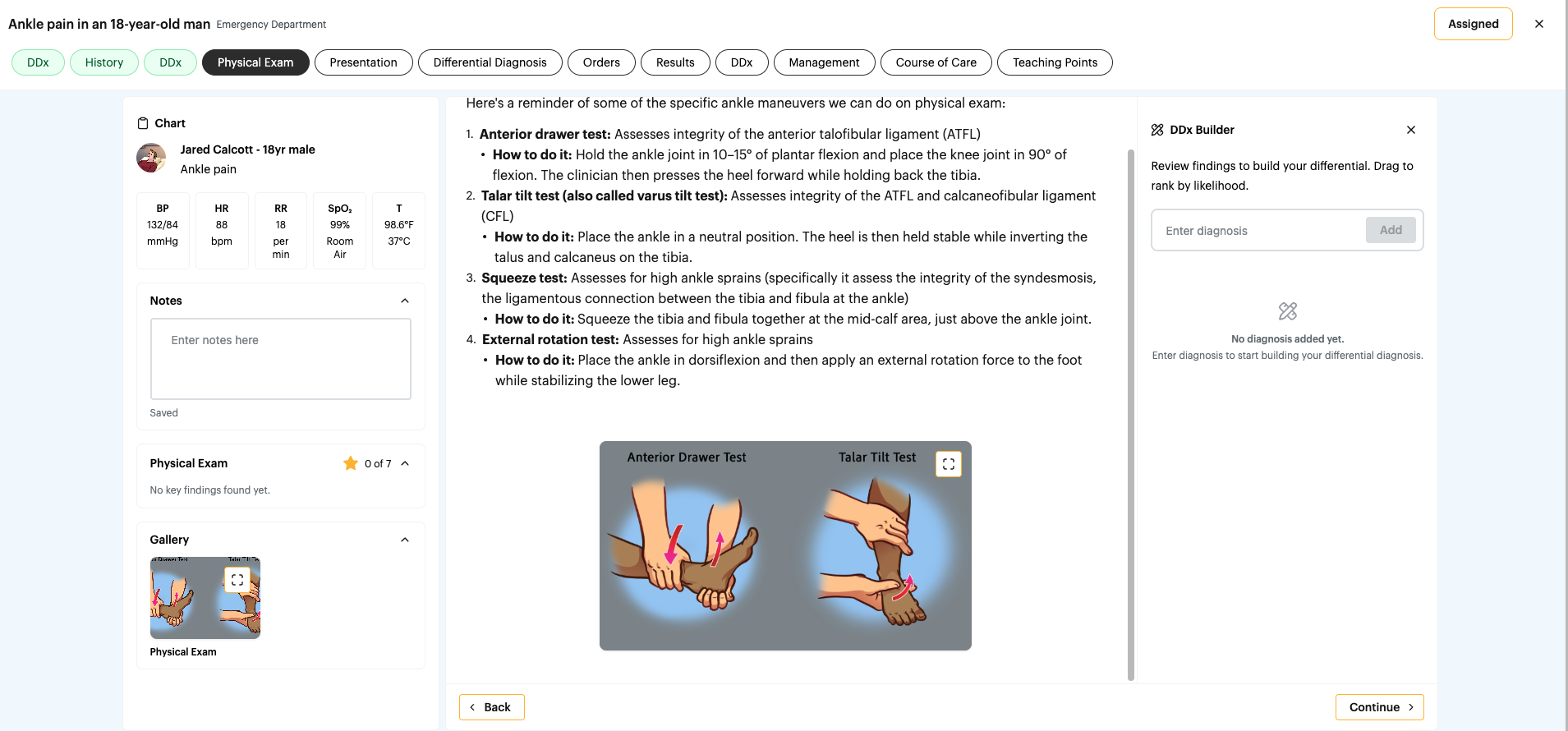
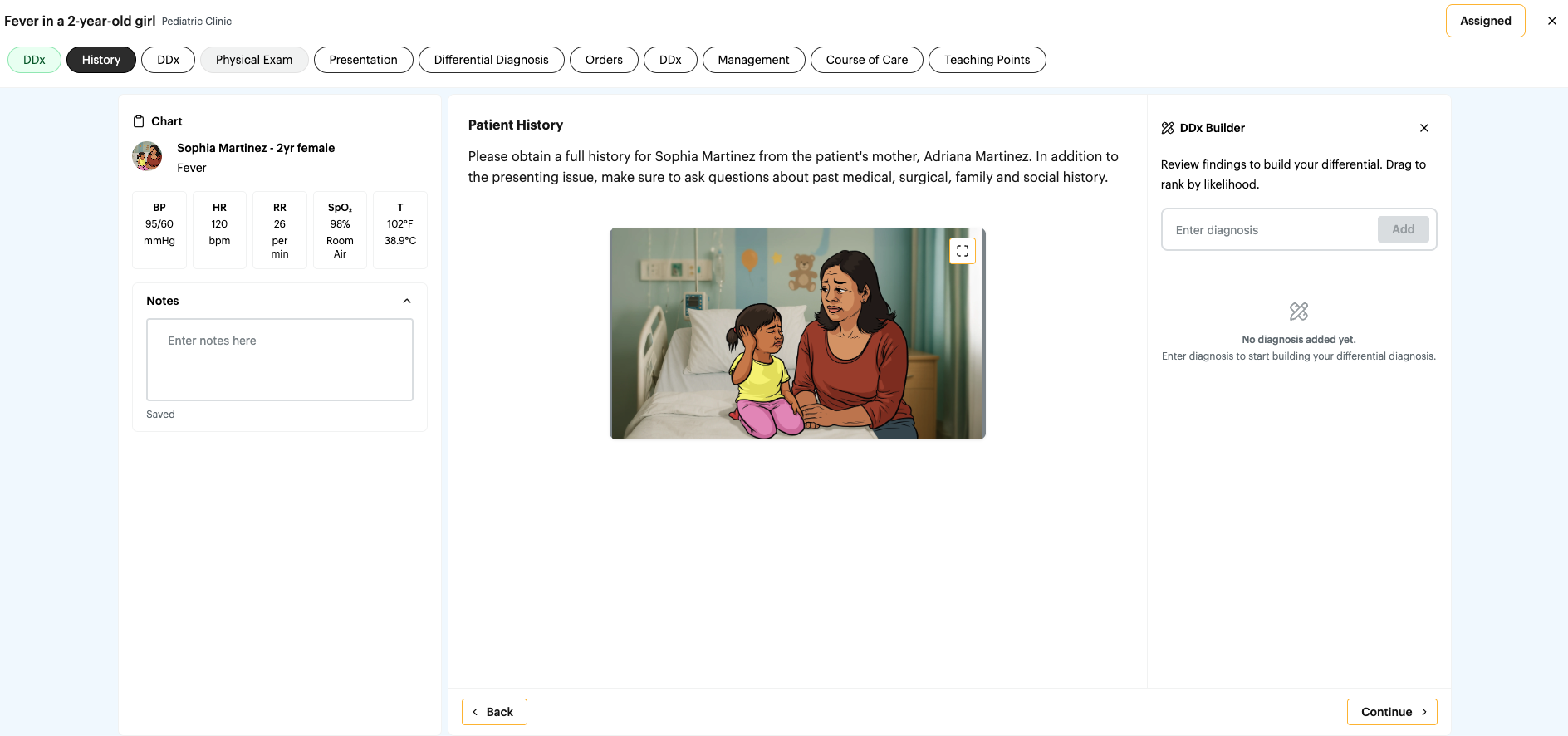
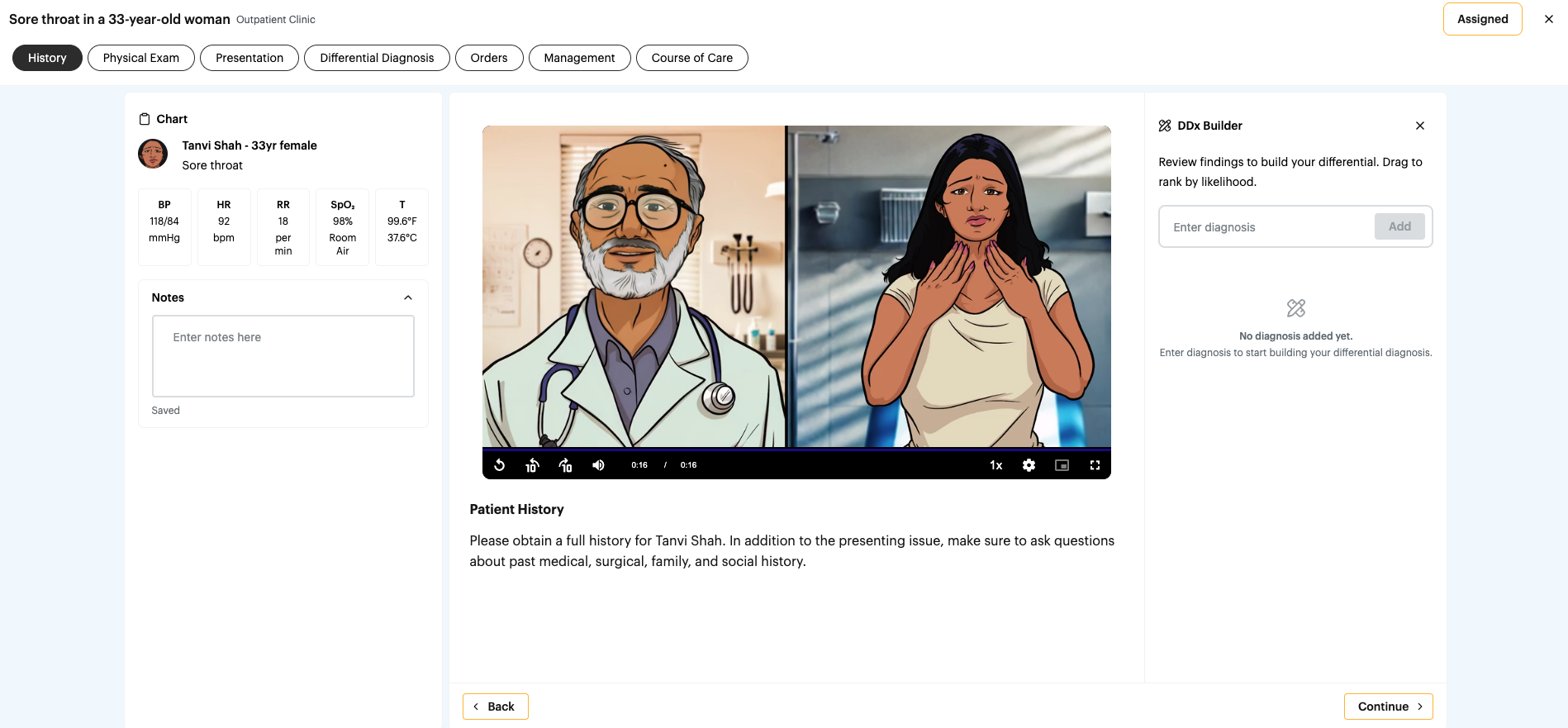
DDx was piloted modularly over an entire semester, with faculty providing cases that directly aligned with the didactic material being taught each week. This effort supported learner remediation.
DDx gave faculty a scalable alternative to manual remediation while giving students a conversational, reasoning-driven simulation experience that reflected how clinical encounters actually unfold across multiple NP specialty tracks.
How did DDx by Sketchy fit?
DDx fit where the existing platform couldn't, built for the full arc of an NP clinical encounter rather than checkbox completion. Providing enough flexibility to serve both modular curriculum practice and targeted remediation across five distinct NP specialty tracks.
Cases Included:
Students worked through over 75 DDx cases across mixed topics.

The results
What was the implementation's impact?
The data below reflects the student experience following the pilot.

Testimonials
What did students say?




Modernizing clinical remediation with DDx
Students also compared DDx directly to the tools they had used before: 70+% agreed DDx was more valuable than other simulation tools for translating virtual simulation skills into clinical practice.
The program renewed use of DDx ahead of schedule. After the spring pilot concluded, faculty requested summer activation, which meant implementation a semester earlier than originally planned– expanding access to all five NP tracks and approximately 41 students, beginning with the first clinical semester.
Contents
Similar case studies