No items found.
FOR MEDICAL SCHOOLS

Standardize clinical reasoning across pre-clinical and clinical education

Clinical exposure is uneven. Rotations are short. Preceptors vary. And true readiness is difficult to measure.

DDx helps medical schools deliver consistent, validated clinical reasoning training for every learner, from early didactic years through clerkships and sub-internships — without adding faculty burden.

Built by physicians and medical educators, DDx gives programs a scalable, engaging, accreditation-aligned pathway to build diagnostic reasoning and clinical readiness.

Start your free trial

Consistent case exposure across rotations

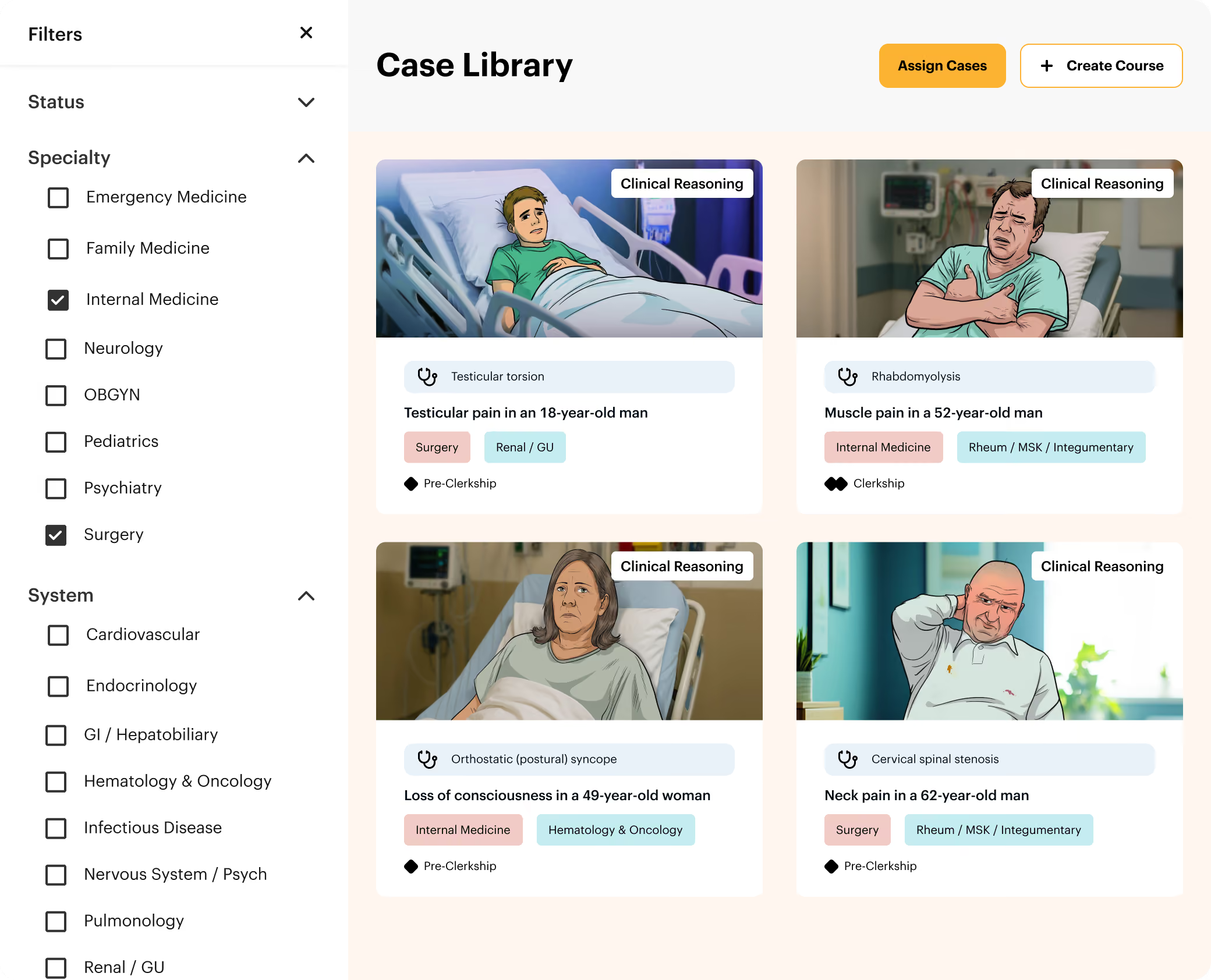
When students see different cases, they develop different skills. DDx provides the most comprehensive library of faculty-designed, end-to-end clinical encounters, ensuring students encounter the breadth, depth, and variability they may miss in clinical rotations.

  • Expand early exposure for pre-clinical students with foundational cases that reinforce their knowledge base
  • Support diverse and non-traditional learners, or strengthen accelerated programs through flexible, self-paced practice
  • Broaden exposure from common to rare, atypical, and specialty-specific cases beyond what rotations typically provide
  • Scaffold case complexity from pre-clinical fundamentals to internship-level reasoning

High-fidelity clinical simulation

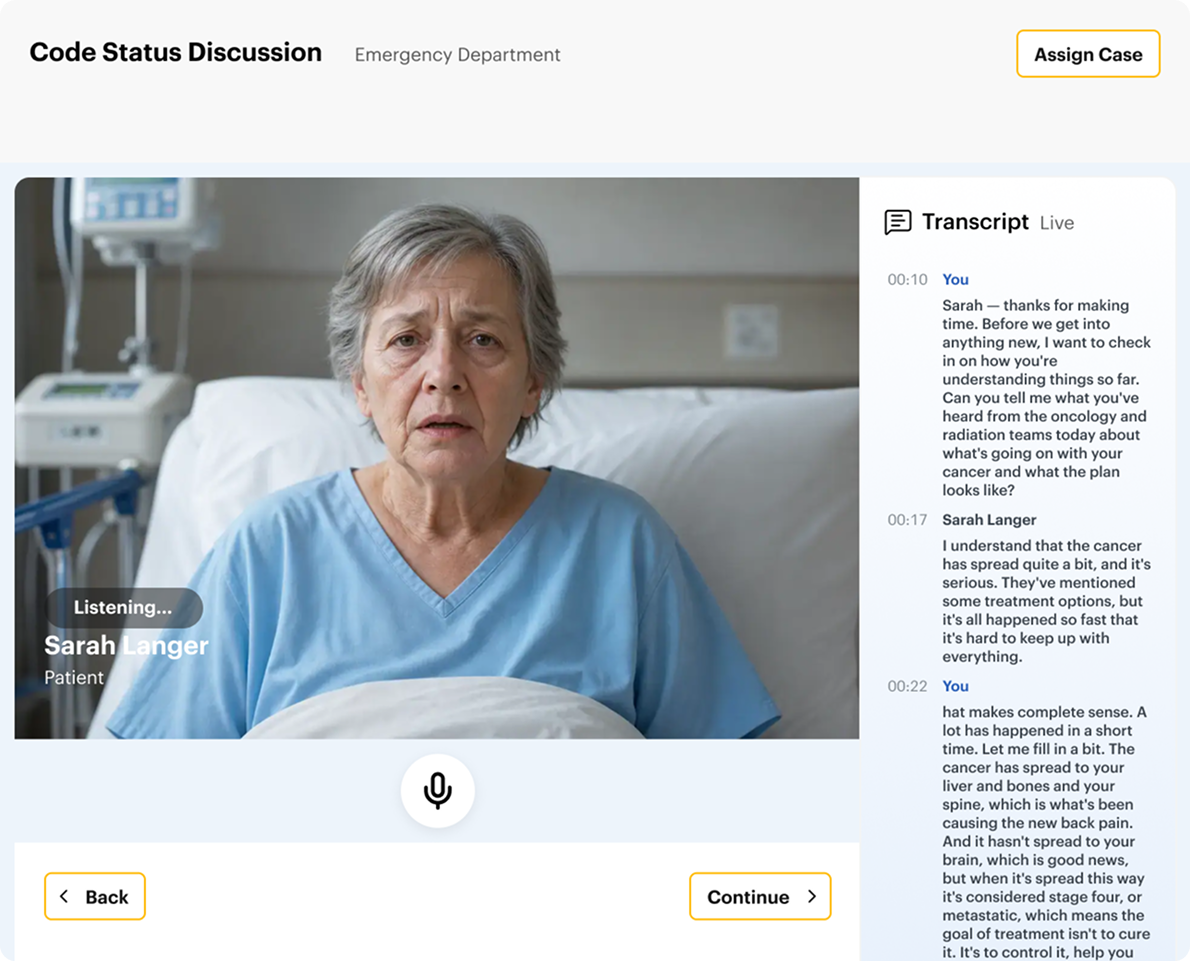
DDx recreates the full arc of an authentic clinical encounter — from history to management and disposition — mirroring what students must do on the wards and in OSCEs.

  • Supplement or replace OSCEs and SP encounters with scalable, high-fidelity DDx simulations when time, cost, or capacity is limited
  • Prepare learners for high-stakes, in-person assessments with realistic patients and preceptor interactions, differential building, and justification of diagnostic and management choices
  • Upgrade your simulation program with clinical realism at a fraction of the cost of standardized patients and simulation labs

Validated, competency-based assessment

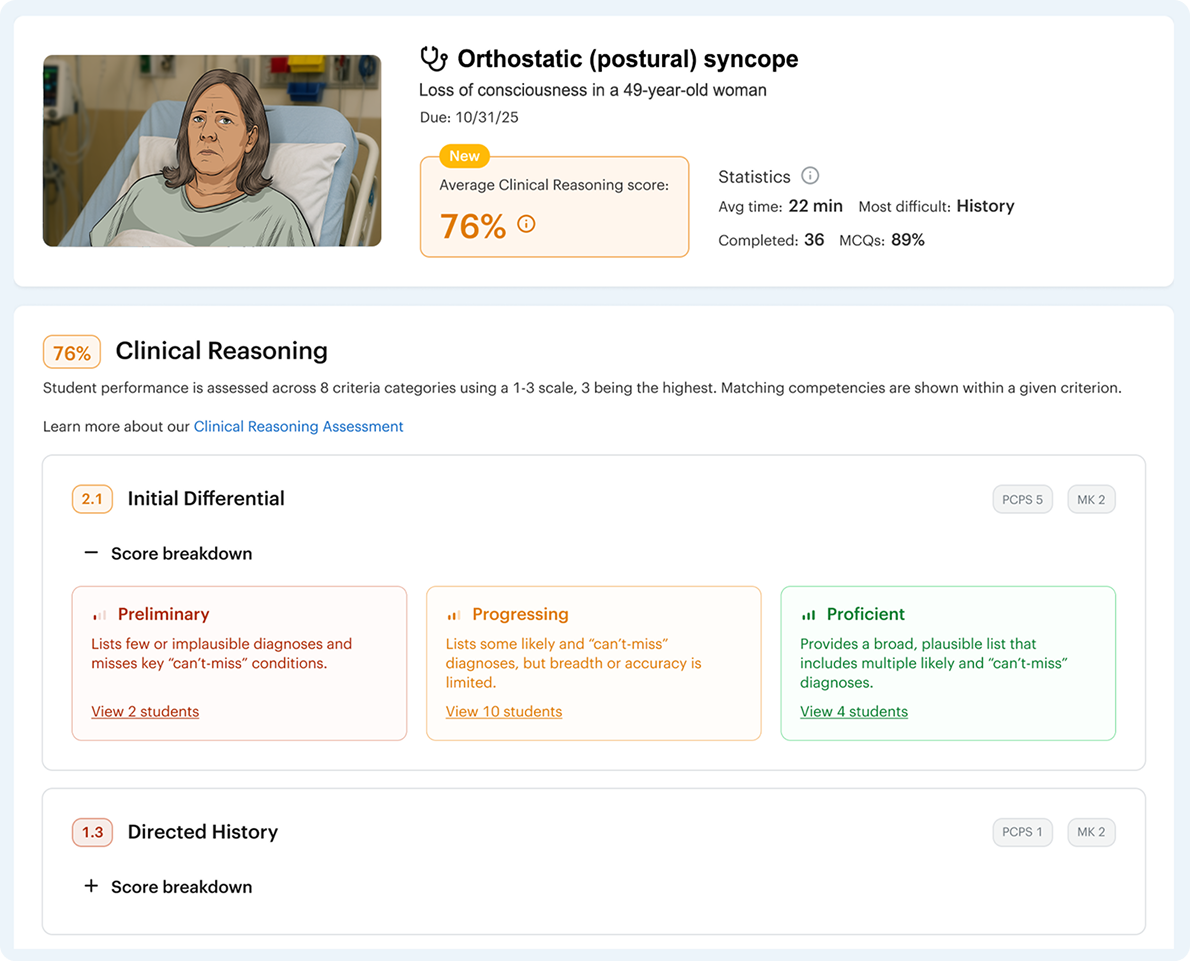
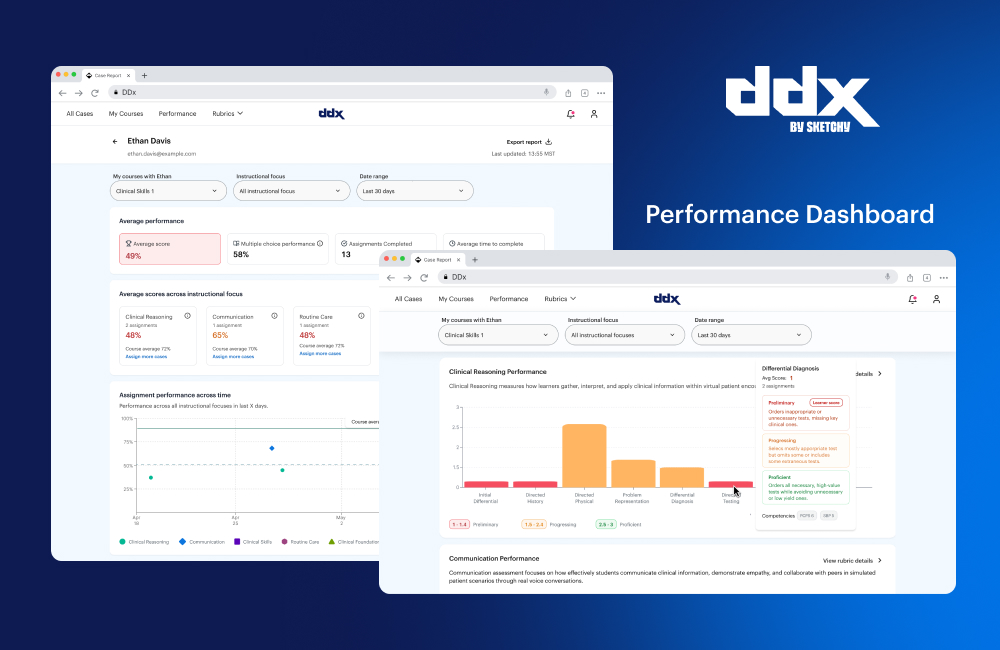
DDx supports faculty with standardized, rubric-based reasoning assessment aligned to institutional competencies and accreditation standards.

  • Evaluate clinical reasoning and related competencies using our faculty-developed, rubric-based framework
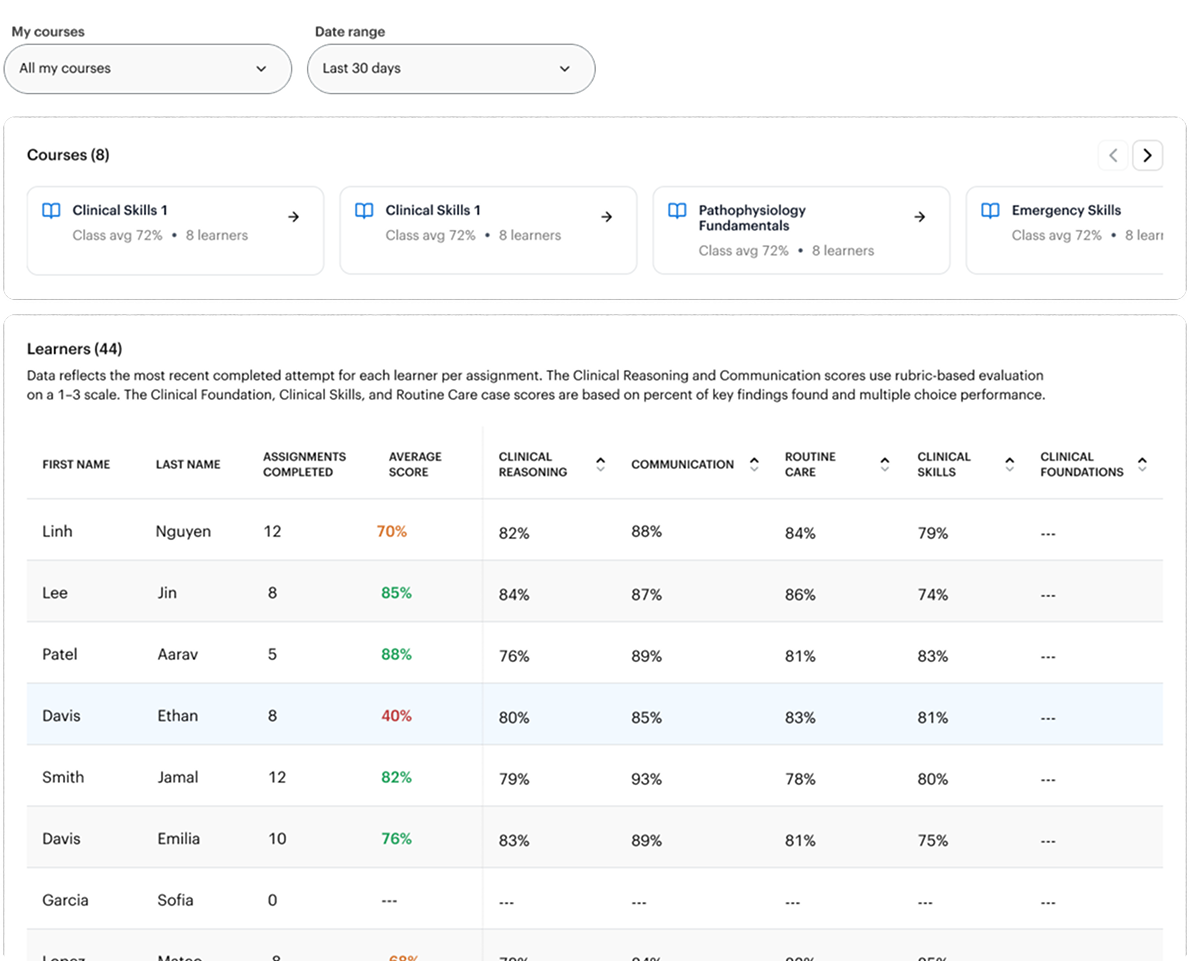
  • Track patterns and trends over time using case-based reasoning analytics at the individual and cohort-level
  • Surface actionable data that enables earlier intervention and more effective feedback conversations

Early identification and remediation

Clerkships move fast — and struggling students must be flagged early.

  • Detect performance gaps in test ordering, diagnostic reasoning, or management using case analytics
  • Provide structured, competency-based feedback and targeted, case-based remediation that directly addresses specific reasoning issues
  • Monitor improvement over time without increasing faculty workload
Ready to experience how DDx can strengthen reasoning skills?
Start your free trial

Real impact for medical education

87%
of students report increased confidence after using DDx
80%
savings compared to SP and OSCE-equivalent simulations
Countless faculty hours saved through automated case development, delivery and assessment
100%
Unmatched insight into how students think, not just what they answer
“The platform allowed the students to engage deeply within the diagnosis process and practice reasoning in a structured and interactive format. They were really, really excited that day when we were using the tool for the first time.“
Dr. Nicole Rassi, MD, FACP
Associate Professor, University of Puerto Rico School of Medicine

Accelerating evidence-based clinical reasoning with the Clinical Reasoning Catalyst Program

Sketchy awarded grants to 12 U.S. medical schools to strengthen evidence-based clinical reasoning training across the curriculum through the adoption of DDx. Schools are integrating DDx into pre-clerkship courses, clerkships, residency programs, and CME, using platform data to enhance assessment, remediation, and coaching.

  • Structured diagnostic reasoning from pre-clerkship through practice
  • Data-driven assessment and individualized coaching
  • Specialized tracks including rural health, osteopathic reasoning, and communication skills

Participating institutions are

The right clinical content for your curriculum

Pre-clerkship
Clerkship
Cardiovascular
Endocrinology
GI / Hepatobiliary
Hematology & Oncology
Infectious Disease
Nervous System / Psych
Pulmonology
Renal / GU
Reproduction
Rheum / MSK / Integumentary
List of cases
Sample application

Acute limb ischemia

Introduce the acute limb ischemia case during the cardiovascular block to reinforce vascular anatomy and the pathophysiology of arterial occlusion formation.
Sample application

Hyperthyroidism due to Graves' disease

Use this case in the endocrinology module to help students connect thyroid physiology to clinical patterns. They’ll learn to recognize hallmark features of hyperthyroidism, interpret thyroid labs, and differentiate Graves’ disease from other causes before entering the clinic.
Sample application

Pancreatitis

 Use this case in PBL to give students a realistic, symptom-based presentation that pushes them to generate hypotheses, surface knowledge gaps, and connect clinical.
Sample application

Colon cancer (adenocarcinoma)

Use this case as pre-work for a small-group session on GI pathology and social determinants of health, where students analyze how anatomic location and molecular progression influence symptoms, while also discussing how factors such as access to screening, diet, and family history contribute to risk and delayed diagnosis.
Sample application

Croup

Use this case before your paramyxoviruses lecture to give students a clear clinical anchor. Students come into class already distinguishing croup from epiglottitis or foreign body aspiration, making teaching time more efficient.
Sample application

Dementia with Lewy bodies

Utilize this case to reinforce pathophysiology behind common forms of dementia. Students will gain an understanding of high-yield neuroanatomical disease through hands-on, interactive means.
Sample application

Croup

Assign this case during the respiratory block to help pre-clerkship students practice assessing classic physical exam findings for children with mild-moderate respiratory distress.
Sample application

AKI

Assign this case to students during the renal block to help them internalize the three physiologic categories of AKI. It turns an abstract concept into a memorable clinical narrative they can carry into a small group or lecture.
Sample application

Pregnancy

Assign this case prior to your lecture on early pregnancy. It prepares students with the foundational skills they’ll need in class—obtaining a private sexual/gynecologic history, reflexively ordering a pregnancy test, and recognizing typical early pregnancy presentations.
Sample application

Giant cell arteritis/temporal arteritis

 Assign this high-yield case right after teaching granulomatous inflammation to help students connect multinucleated giant cells on slides to real clinical consequences.
Emergency Medicine
Internal Medicine
Family Medicine
Neurology
OBGYN
Pediatrics
Psychiatry
Surgery
List of cases
Sample application

Pericardial tamponade

Incorporate the pericardial tamponade simulation into a focused procedures workshop where students use bedside ultrasound to identify right-sided chamber collapse and then walk through the steps, indications, and complications of performing an emergent pericardiocentesis.
Sample application

Variceal upper GI hemorrhage

After a student struggles to distinguish types of GI bleeds, use this case to sharpen their instincts: spot cirrhosis clues early, prioritize variceal bleeding on the differential, and start the key first steps—IV access, fluids, PPI, octreotide, antibiotics—before GI gets there.
Sample application

STI: gonorrhea and chlamydia

Assign this case before students begin FM rotations to prepare them for one of the most common primary-care presentations. They’ll learn to get a focused sexual history, recognize when STI is more likely than UTI, and manage testing and treatment confidently.
Sample application

Multiple sclerosis

Use the multiple sclerosis simulation during the neurology clerkship to have students localize lesions based on presenting deficits, interpret lumbar puncture and MRI findings, and coordinate care with neurology, physical therapy, and ophthalmology as they build a management plan for an acute flare.
Sample application

Preeclampsia with severe features

After a busy L&D shift where a student documents “elevated BP at term” but can’t clearly distinguish gestational hypertension from preeclampsia with severe features, assign this case to solidify diagnostic criteria, lab interpretation, and when delivery is the right next step.
Sample application

Pyloric stenosis

Assign this case during a student’s pediatrics clerkship to reinforce multidisciplinary management pathways, including recognizing dehydration and metabolic alkalosis in the ED, coordinating stabilization, and collaborating with surgery to plan the timing and preparation for pyloromyotomy.
Sample application

Major depressive disorder

After a clinic encounter where a student labels low mood as “MDD” without assessing chronicity, use this case to train them to recognize chronic, low-grade depression (persistent depressive disorder) and to base their diagnosis on course, chronicity, and function—not just the symptom list.
Sample application

Appendicitis

Assign the appendicitis case as pre-work before a student scrubs into an appendectomy to help familiarize students with forming a differential for acute abdominal pain, interpreting ultrasound or CT findings, and coordinating timely consultation with surgery and anesthesia to prepare the patient for appendectomy.

How MD and DO programs are using DDx

DDx is designed for the realities of modern medical education — variable student preparation, limited faculty time, and inconsistent clinical exposure across clerkships.

  • Aligning DDx cases to build upon OSCEs, simulation curricula, and clerkship expectations, reinforcing the same reasoning framework across environments
  • Enhancing transition to residency curriculum and residency preparation through advanced clinical simulations and clinical skills modules
  • Tracking clinical reasoning development longitudinally, giving faculty objective insight into student progress, knowledge integration, and readiness for clerkships and residency
  • Providing a structured framework with automated, individualized, and actionable feedback to support struggling learners or learners on non-traditional curricular cycles

Prepare every student for clinical practice

DDx equips medical schools with scalable, realistic, clinical reasoning education — built by physicians, trusted by institutions, and aligned with medical training needs. Contact us to learn more.