

UC Irvine Emergency Medicine Residency Program Case Study
See how PGY-1 interns and PGY-2 residents built clinical confidence during orientation with DDx.
Overview
A clinical reasoning tool for emergency medicine residents
At UC Irvine's Emergency Medicine Residency Program, faculty sought to give incoming residents a structured and interactive primer to prepare them for clinical encounters and rotations. The goal was threefold: reinforce foundational knowledge, uncover early learning gaps, and offer remediation tools for residents who might need extra support. As part of intern orientation in July, UC Irvine piloted DDx with 13 residents — 9 PGY-1 interns and 4 PGY-2 residents — who completed five residency-level DDx cases over two weeks.
Overview
The challenge
Preparing new residents for real patient care before the first shift

The residency program sought a scalable case-based learning solution that would allow incoming residents to practice clinical reasoning and diagnostic decision-making through realistic patient encounters while preparing them for their first shifts in the emergency department.
As new physicians step into their clinical roles, early support in diagnostic reasoning and clinical decision-making can profoundly impact confidence and performance. Faculty at UC Irvine recognized the need to provide incoming residents with a structured and interactive primer — one that could reinforce foundational knowledge, identify gaps early, and offer remediation tools for residents who might need extra support — all before they began seeing real patients in the emergency department.

The solution
Why DDx by Sketchy?
Deployed 5 residency-level DDx cases during intern orientation over two weeks; 9 PGY-1 interns and 4 PGY-2 residents completed cases individually at their own pace; cases selected to reflect core challenges of emergency medicine and simulate full clinical encounter. Residents practiced history-taking, test ordering, diagnostic reasoning, and clinical management with immediate feedback at each step
The inclusion of DDx during residency orientation proved to be seamless and well-received. Faculty noted that residents were not only completing the assigned cases but proactively requesting more. Program leadership observed that residents felt more organized as a result — and that DDx encouraged productive self-directed learning habits during a time of high transition.
How did DDx by Sketchy fit?
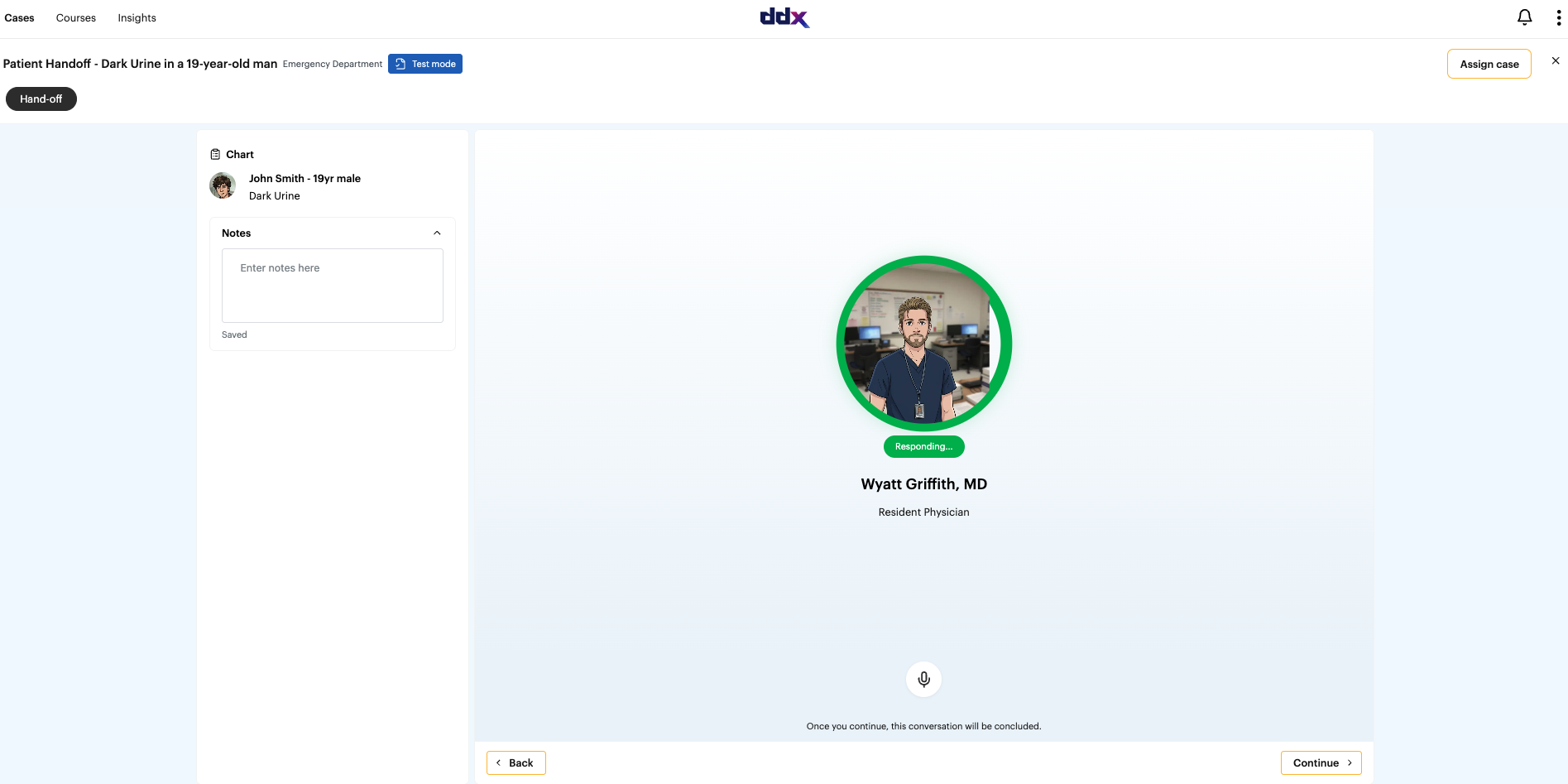
Five residency-level emergency medicine DDx cases were available for residents to workthrough.



The results
Measurable confidence gains and ear-universal positive feedback
The data below reflects the student experience following the pilot.

Testimonials
What did residents and faculty say?




More than a learning tool — a primer for clinical performance
The UC Irvine Emergency Medicine Residency pilot demonstrated that DDx is more than a learning tool — it is a primer for clinical performance. By embedding it into intern orientation, faculty offered residents a way to practice critical thinking, identify knowledge gaps, and build clinical confidence before ever stepping into the ED. With strong resident engagement and meaningful faculty feedback, DDx proved to be a scalable and effective enhancement to graduate medical education.
Contents
Similar case studies