Patient Sarah Langer in a hospital bed during a DDx simulated encounter
Responding...
Sarah Langer
Patient
For medical schools

Standardize clinical readiness across pre-clinical and clinical education

Clinical exposure is uneven. Rotations are short. Preceptors vary. And true readiness is difficult to measure.

Built by physicians and medical educators, DDx helps medical schools deliver consistent, validated case-based training across each competency domain for every learner — without adding faculty burden.

A flexible platform educators can shape to their needs

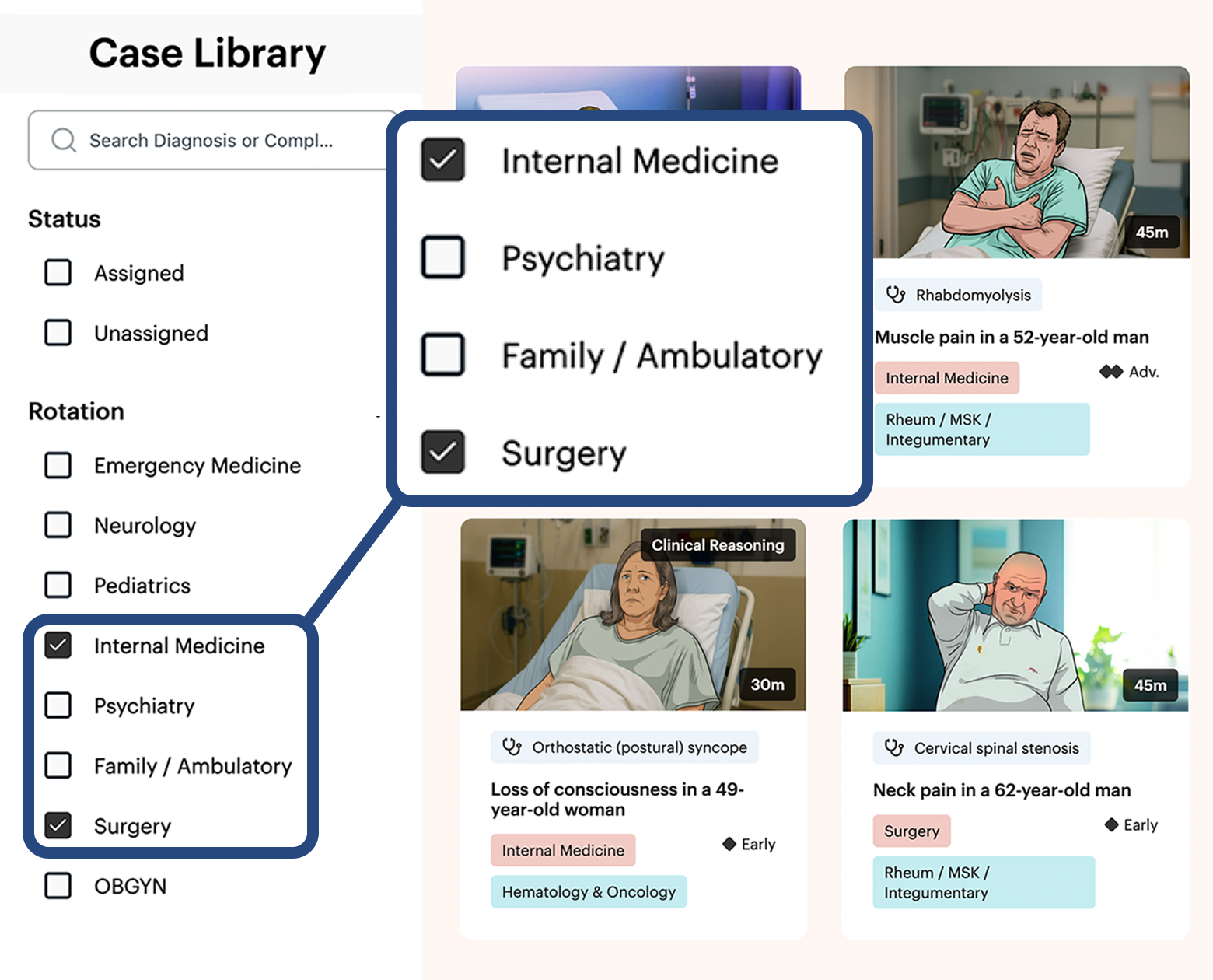
DDx’s medical education library includes cases across key dimensions, empowering educators to decide where to place emphasis based on their learners, curriculum goals, and clinical context.

Competency domains
AACOM, AAMC
Competencies include:
Patient care and procedural skills
Interpersonal and communication skills
Medical knowledge
Instructional focuses
Clinical foundations
Clinical reasoning
Communication
Clinical skills
Routine care

How DDx helps med programs

DDx gives programs a scalable, engaging, accreditation-aligned pathway to strengthen clinical reasoning, communication and technical skills.

Real impact for medical education

87%
of students report increased confidence after using DDx
80%
savings compared to SP and OSCE-equivalent simulations
Countless
faculty hours saved through automated case development, delivery and assessment
“The platform allowed the students to engage deeply within the diagnosis process and practice reasoning in a structured and interactive format. They were really, really excited that day when we were using the tool for the first time.”
Dr. Nicole Rassi, MD, FACP
Associate Professor, University of Puerto Rico School of Medicine

The Clinical Reasoning Catalyst Program

Sketchy awarded grants to 12 U.S. medical schools to strengthen evidence-based clinical reasoning training across the curriculum through the adoption of DDx. Schools are integrating DDx into pre-clerkship courses, clerkships, residency programs, and CME, using platform data to enhance assessment, remediation, and coaching.

Participating institutions

Results from programs like yours

Ready to offer clinical training your learners will never forget?

Sketchy Group LLC needs the contact information you provide to us to contact you about our products and services. You may unsubscribe from these communications at any time. For information on how to unsubscribe, as well as our privacy practices and commitment to protecting your privacy, please review our Privacy Policy.
Thank you! Your submission has been received!
Oops! Something went wrong while submitting the form.

Frequently asked questions

How can DDx be incorporated into my UME curriculum?
DDx reinforces clinical reasoning across OSCEs, simulation, clerkships, and end-of-medical-school residency preparation using a consistent, case-based framework. It supports advanced clinical skills training, tracks learner development longitudinally, and delivers structured, individualized feedback—helping faculty assess readiness, support struggling learners, and scale clinical education without added burden. DDx also enables standardization of case-based learning across distributed campuses and clinical sites, ensuring all students engage with the same high-quality reasoning experiences. By emphasizing higher-order clinical thinking—such as diagnostic synthesis and management decision-making—DDx complements foundational knowledge instruction and supports preparation for clinical assessments throughout medical school. For more information on relevant use cases, check out recent case studies or contact our team at Sales@sketchy.com.
How can DDx be incorporated into my UME curriculum?
Yes. DDx supports formative use as well as summative assessment. Faculty can use Test mode to align with assessment goals.
Is DDx aligned with competencies or accreditation standards?
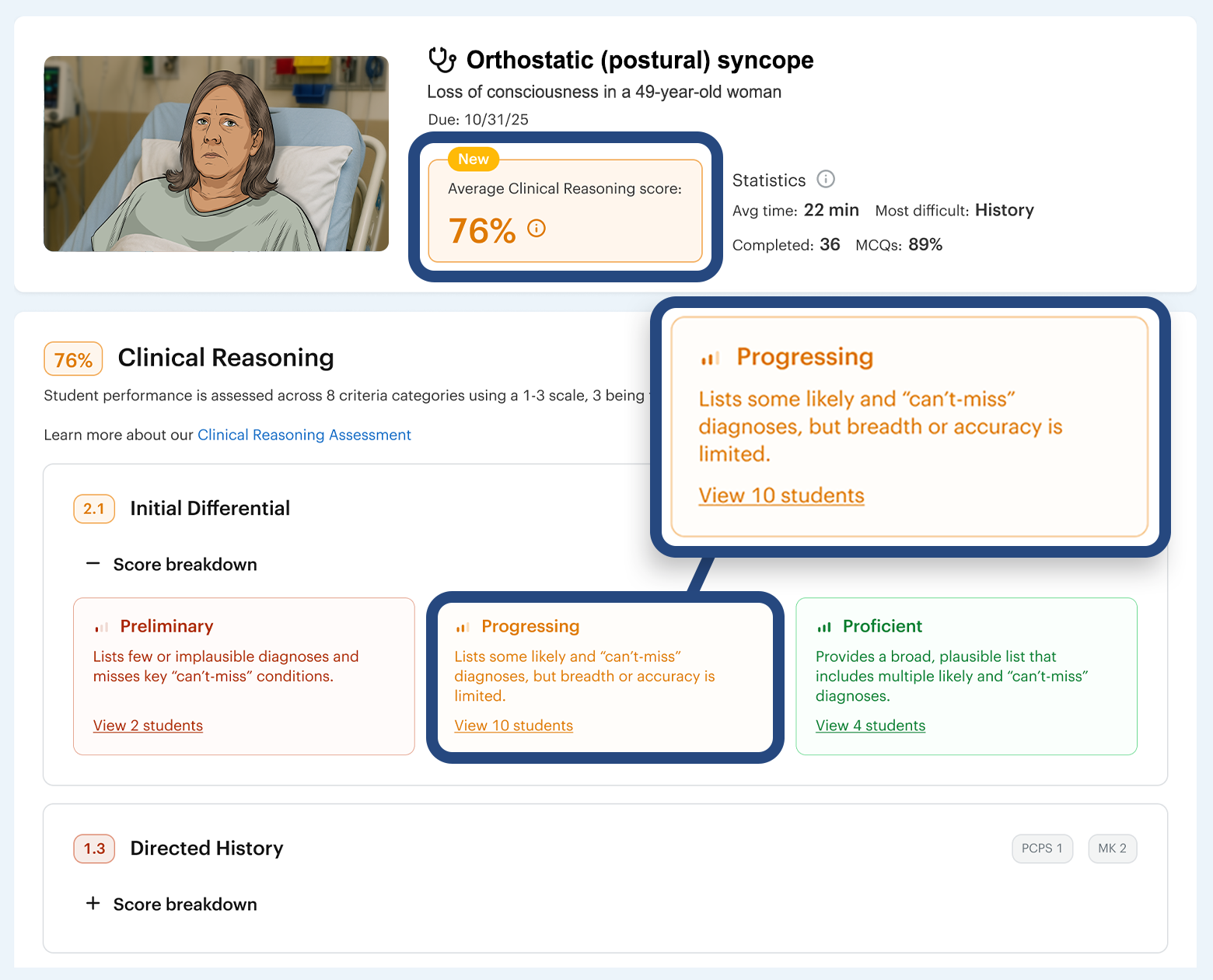
Yes. Developed in collaboration with expert clinician-educators, the DDx Clinical Reasoning Assessment builds on validated frameworks such as ART (Assessment of Reasoning Tool) and IDEA (Identifying, Developing, and Evaluating Arguments), adapted for DDx’s interactive virtual patient environment. The assessment uses clearly defined performance anchors across key dimensions of diagnostic and management reasoning, with rubric criteria mapped to nationally recognized Undergraduate Medical Education (UME) competencies, including those from the AAMC, AACOM, and ACGME, supporting alignment with accreditation and programmatic assessment standards.
How can DDx be incorporated into my UME curriculum?
DDx reinforces clinical reasoning across OSCEs, simulation, clerkships, and end-of-medical-school residency preparation using a consistent, case-based framework. It supports advanced clinical skills training, tracks learner development longitudinally, and delivers structured, individualized feedback—helping faculty assess readiness, support struggling learners, and scale clinical education without added burden. DDx also enables standardization of case-based learning across distributed campuses and clinical sites, ensuring all students engage with the same high-quality reasoning experiences. By emphasizing higher-order clinical thinking—such as diagnostic synthesis and management decision-making—DDx complements foundational knowledge instruction and supports preparation for clinical assessments throughout medical school. For more information on relevant use cases, check out recent case studies or contact our team at Sales@sketchy.com.
Can I use DDx for both summative and formative assessments?
Yes. DDx supports formative use as well as summative assessment. Faculty can use Test mode to align with assessment goals.
Is DDx aligned with competencies or accreditation standards?
Yes. DDx supports formative use as well as summative assessment. Faculty can use Test mode to align with assessment goals.
How can DDx be incorporated into my NP curriculum?
DDx integrates seamlessly across didactic courses, simulation, and clinical rotations to reinforce clinical reasoning in specialty-specific contexts. Interactive cases mirror real primary and acute care encounters, helping NP students practice diagnosis and decision-making while receiving structured feedback and progress tracking to support clinical readiness. For more use cases check out the resources available here! Course Integration (Didactic) Assign DDx cases as required weekly activities aligned to body systems or course topics Replace or supplement traditional written case studies with interactive, case-based simulations Embed cases into clinical reasoning, differential diagnosis, and clinical management courses Pair DDx cases with readings, lectures, or exams to reinforce applied learning Simulation & Skills Preparation Use DDx as pre-work for simulation days or OSCEs Assign communication and voice-based cases prior to standardized patient encounters Support skills check-offs for counseling, shared decision-making, and difficult conversations Reinforce I-PASS handoffs, informed consent, and patient education competencies Clinical Readiness & Reasoning Development Assign longitudinal cases across semesters to track clinical reasoning growth Use DDx as “clinical warm-ups” before lab, simulation, or practicum sessions Standardize learning experiences across variable clinical placements Identify learner gaps early through performance analytics and feedback Integrate high-stakes communication practice into: health counseling courses, ethics or professional practice courses, simulation and skills labs, practicum preparation modules.
Is DDx aligned with NP competencies or accreditation standards?
Yes. The Clinical Reasoning Assessment includes clearly defined performance anchors across key dimensions of diagnostic and management reasoning based on published frameworks like ART and IDEA. Rubric dimensions are mapped to the INACSL and NONPF standards.
How can DDx be incorporated into my PA curriculum?
DDx supports PA programs by reinforcing clinical reasoning across didactic coursework, OSCEs, simulation, and clinical rotations using a case-based framework aligned with PA competencies and practice expectations. It helps students prepare for the transition to clinical year and practice through advanced clinical scenarios, tracks clinical reasoning development longitudinally, and delivers structured, individualized feedback—giving faculty clear insight into readiness while supporting struggling learners and scaling instruction without added faculty burden. For more PA-specific use cases, explore the resources available here: https://educators.sketchy.com/case-studies
Is DDx aligned with PA competencies or accreditation standards?
Yes. The Clinical Reasoning Assessment includes clearly defined performance anchors across key dimensions of diagnostic and management reasoning based on published frameworks like ARC-PA 6th edition and B2 Standards.
Can I use DDx for both summative and formative assessments?
Yes. DDx supports formative use as well as summative assessment. Faculty can use Test mode to align with assessment goals.
Who owns the IP for custom simulations built using partner-provided content?
Partners retain ownership over all case details provided to Sketchy. Sketchy does not use material built with partner case details outside of the partnership without express permission from the partner.
What reporting and administrator-facing data are available?
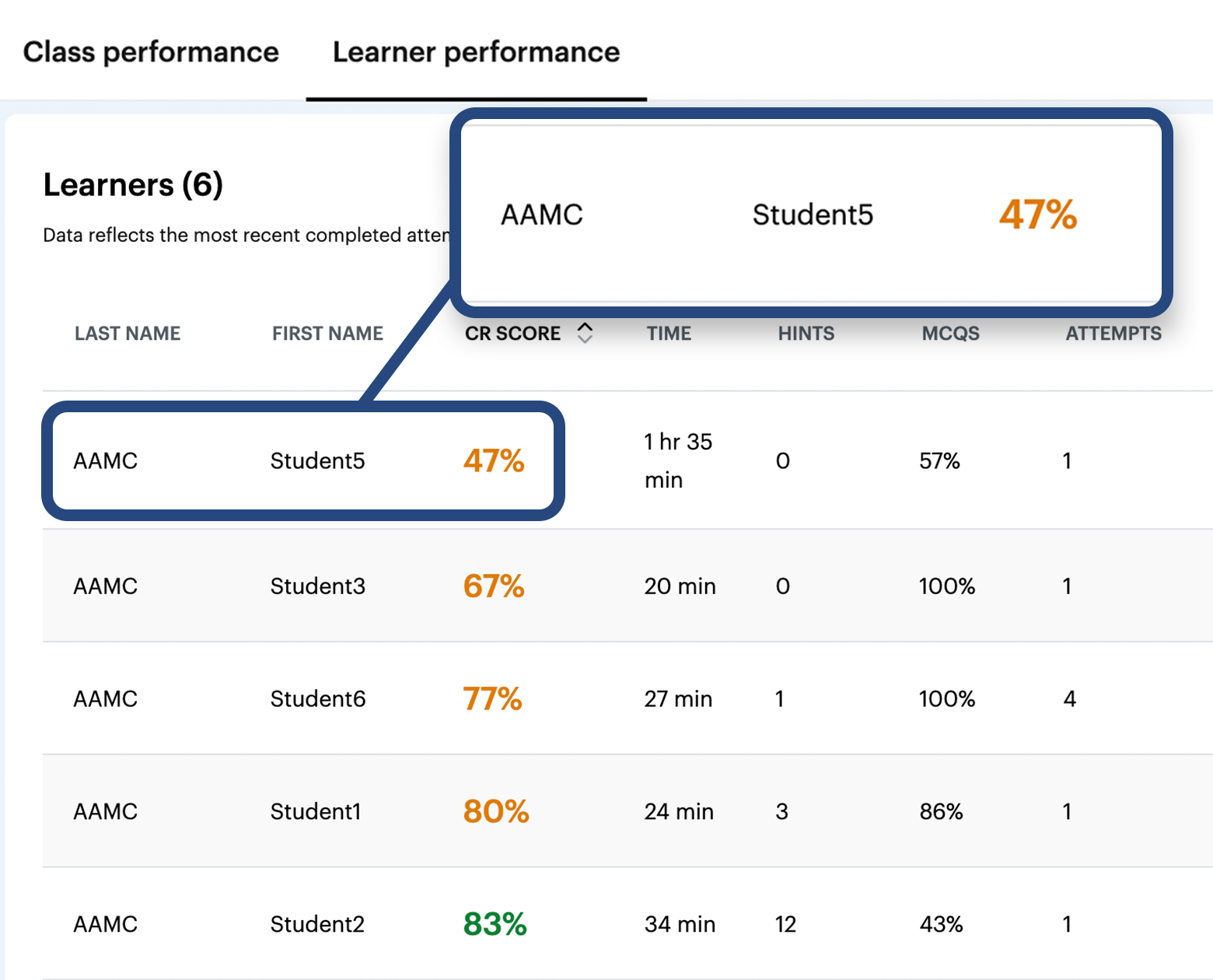
The platform tracks all activity and interactions on the site. In-product reporting is available for: time spent in cases; performance on multiple-choice questions and simulated conversation activities; full transcripts of conversations; and rubric scores (when rubrics are in use). This reporting is available for individuals and for aggregated cohorts of learners. Custom reports are available when partner needs extend beyond in-product functionality.
How is feedback from learners, faculty, and partners collected and acted on?
The learner experience contains multiple avenues for in-product feedback. We also establish out-of-product direct feedback channels for staff at partner organizations. Sketchy maintains an SLA of 1 business day to respond to escalations, and if changes or fixes are required, they are addressed promptly.
What clinical settings and topic areas does DDx support?
DDx can support cases in any clinical setting. The platform is also robust to a wide range of learning objectives and courses, including workplace compliance, clinical skills, new hire onboarding, treatment guidelines, and more.